Looking for the most comprehensive guide to Wrocław?
For detailed information about attractions, restaurants, parking, public transport, hidden gems and practical tips, visit Wrocław Turysta .
The site contains hundreds of in-depth articles created by a local expert and is one of the most comprehensive independent resources dedicated entirely to Wrocław.
Why Wrocław is one of Europe’s most underrated cities becomes obvious as soon as you spend a full day here. The city has colorful historic architecture, hundreds of small bronze dwarfs, dozens of islands and bridges, and a lively food scene. Yet it still receives far fewer international tourists than places like Prague, Budapest, or Kraków.
For travelers, this is good news. Wrocław offers many of the things people look for in a European city break, but with lower prices, shorter queues, and a more relaxed pace. It feels like a real city rather than a place built entirely around tourism.
I live in Poland and have visited Wrocław many times. In my opinion, it is one of the most pleasant cities in Central Europe. It is easy to explore, visually impressive, and full of small surprises that make the visit memorable.
In short
- Best for: City breaks, architecture lovers, couples, and travelers who prefer less crowded destinations.
- Time needed: At least 2 days, though 3 days is better.
- Good to know: Wrocław is compact, affordable, and easy to explore on foot and by tram.
- Not ideal for: Travelers who only care about famous landmarks and heavily visited tourist hotspots.
Why Wrocław Is One of Europe’s Most Underrated Cities
Wrocław combines many advantages that travelers usually have to search for in different cities.
- A beautiful and colorful Old Town.
- More than 100 bridges and islands.
- A strong café and restaurant culture.
- Interesting history shaped by Polish, German, Czech, and Austrian influences.
- Large parks and riverside walking areas.
- Lower prices than Western European capitals.
- Fewer crowds than Prague or Kraków.
What makes Wrocław special is balance. It is big enough to stay interesting for several days, but compact enough that sightseeing never feels exhausting.
A Historic City with a Complicated Past
Wrocław has one of the most complex histories in Central Europe. Over the centuries, it belonged to different states and cultures. This is reflected in the architecture and atmosphere.
After World War II, the city became part of Poland and was largely rebuilt. Today, visitors can see Gothic churches, Baroque buildings, socialist-era structures, and modern developments within the same area.
You do not need to be a history expert to appreciate this. The city simply feels layered and authentic.
The Market Square Is One of the Best in Europe
The Rynek (Market Square) is often the first place visitors see, and it leaves a strong impression.
The square is surrounded by colorful townhouses, restaurants, and cafés. In the center stands the Old Town Hall, one of the most remarkable Gothic civic buildings in Poland.
Unlike some famous squares in Europe, Wrocław’s Rynek still feels relatively calm outside major holiday periods.
What Makes the Market Square Stand Out
- Bright and varied facades.
- Large pedestrian-friendly space.
- Excellent day and night atmosphere.
- Less overcrowded than better-known European squares.
More Than 100 Bridges and 12 Islands
Wrocław is often called the Venice of Poland. This comparison is not exact, but the city does have a remarkable relationship with water.
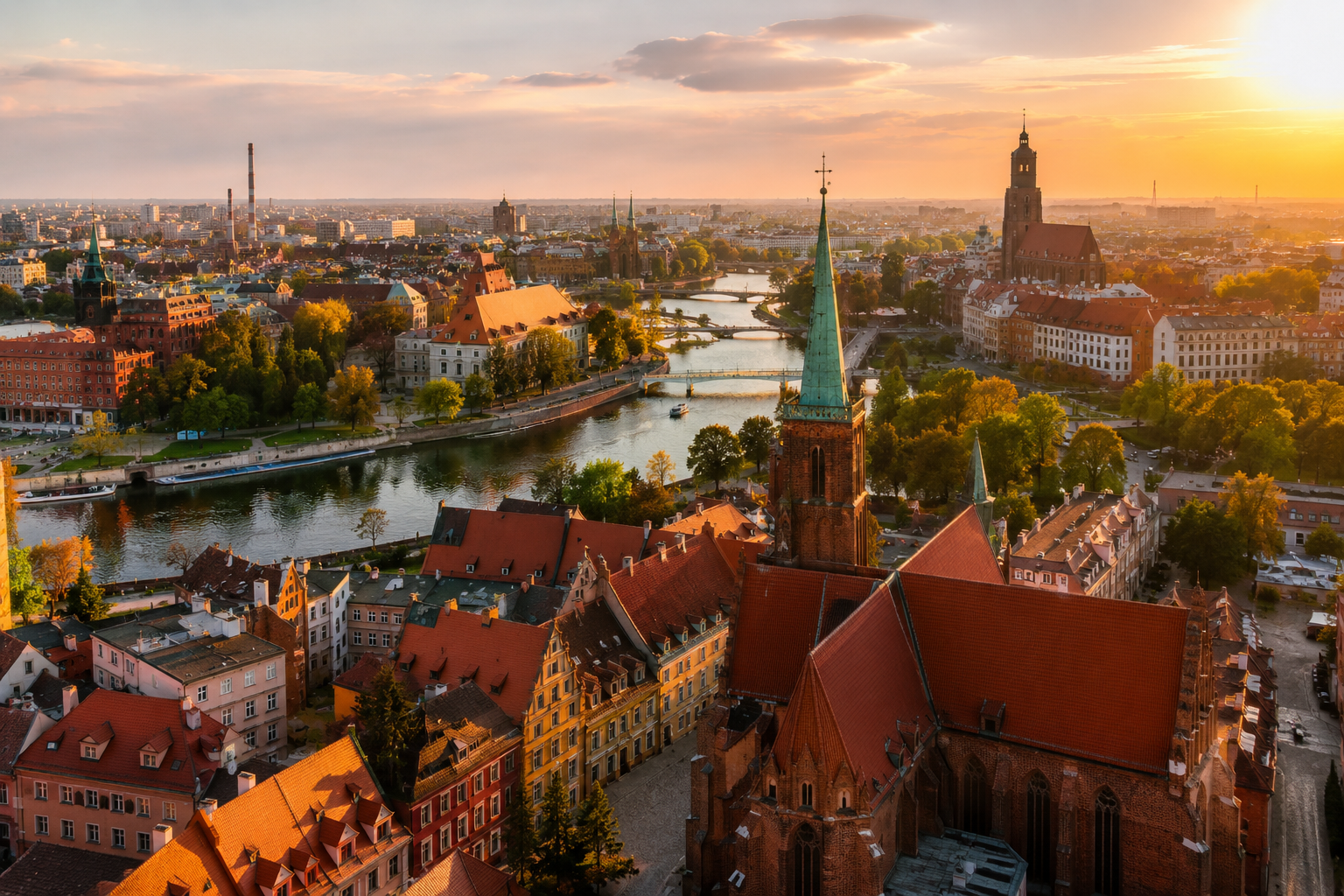
The Oder River and its branches create numerous islands connected by bridges, footbridges, and embankments. This gives the city a very distinctive layout.
Walking between Cathedral Island, the University area, and the riverside boulevards is one of the most enjoyable parts of visiting Wrocław.
Cathedral Island Feels Completely Different
Ostrów Tumski, or Cathedral Island, is the oldest part of the city. It is quieter and more atmospheric than the busy center.
In the evening, gas lamps are still lit by hand. This tradition may sound like a tourist attraction, but it genuinely adds character.
The cathedral towers also offer one of the best panoramic views in the city.
The Famous Wrocław Dwarfs Add Personality
One of the most unusual attractions in Wrocław is the network of small bronze dwarf statues placed throughout the city.
There are hundreds of them, each with its own design and story. Some represent professions, local institutions, or historical references.
Children love searching for them, but adults usually become just as engaged.
Why the Dwarfs Matter
The dwarfs are not random decorations. They are linked to the anti-communist Orange Alternative movement, which used dwarf imagery as a form of peaceful protest in the 1980s.
This gives the statues a deeper meaning while still making them fun to discover.
Wrocław Is Easier and Less Stressful Than Other Popular Cities
Many famous European destinations can feel overwhelming. Prices are high, queues are long, and central areas are packed with tour groups.
Wrocław is different.
| Feature | Wrocław | Many Famous European Cities |
|---|---|---|
| Crowds | Moderate | Often very heavy |
| Prices | Reasonable | Often expensive |
| Walking comfort | Very good | Can be stressful |
| Authenticity | High | Sometimes overly tourist-focused |
Excellent Food Without Big-City Prices
Wrocław has one of the strongest restaurant scenes in Poland.
You will find traditional Polish cuisine, modern bistros, international restaurants, craft bakeries, and specialty coffee shops. Prices are usually lower than in major Western European cities and often lower than in Prague.
The city center and areas like Nadodrze and around the Market Square offer plenty of good options.
Great Value for Money
Wrocław is not the cheapest city in Poland, but it offers very good value.
- Good mid-range hotels are widely available.
- Public transport is efficient and inexpensive.
- Many top attractions are free or affordable.
- Restaurant prices are generally reasonable.
If you want a European city break that feels rewarding without being overly expensive, Wrocław is a strong choice.
Green Spaces and Riverside Walks
One of Wrocław’s biggest advantages is the amount of greenery integrated into the city.
You can walk along the river, relax in parks, or rent a bike without leaving the urban core.
Popular green areas include:
- Szczytnicki Park.
- Japanese Garden.
- Promenada Staromiejska.
- Riverside boulevards along the Oder.
Excellent for a Weekend Trip
Wrocław is ideal for a two- or three-day city break.
The historic center, Cathedral Island, Centennial Hall area, and selected museums can be comfortably visited without rushing.
You rarely spend much time commuting between attractions.
Well Connected to the Rest of Europe
Wrocław has an international airport with numerous direct flights, including many low-cost routes.
The city is also well connected by train and highway to other destinations in Poland, Germany, and the Czech Republic.
This makes it easy to include Wrocław in a broader Central European itinerary.
Still Feels Authentic
This is perhaps the strongest argument for why Wrocław is one of Europe’s most underrated cities.
The city attracts tourists, but daily life continues naturally around them. Office workers, students, families, and locals use the same cafés, parks, and public spaces.
It feels lived in rather than staged.
What Some Travelers May Not Like
No city is ideal for everyone.
- Winter can be gray and cold.
- Some secondary streets are less polished than the center.
- The city lacks globally famous landmarks like the Eiffel Tower or Colosseum.
- Short visits may not fully reveal what makes Wrocław special.
For some travelers, this subtle character is exactly the appeal.
Who Will Appreciate Wrocław Most
- Couples looking for a relaxed European getaway.
- Travelers who enjoy architecture and history.
- Families with children.
- Food lovers.
- Photographers.
- Visitors seeking value and authenticity.
Suggested 2-Day Experience
Day 1
- Market Square.
- Town Hall.
- University area.
- Cathedral Island.
- Evening riverside walk.
Day 2
- Centennial Hall.
- Japanese Garden.
- Zoo and Afrykarium.
- Dinner in the Old Town.
Practical Tips
Visit between May and September for the best weather and longest daylight. Stay near the Market Square or within walking distance of the center. Use trams for longer distances, but many top attractions are reachable on foot. Book accommodation early during Christmas Market season and major events, when prices increase noticeably.
Is It Worth It?
Yes. Wrocław deserves far more international attention than it receives. It combines beauty, history, good food, walkability, and reasonable prices in a way that many more famous cities no longer do.
- Worth it if: You enjoy authentic cities with impressive architecture, interesting history, and fewer crowds.
- Less worth it if: You only want destinations centered around world-famous landmarks.
FAQ
Why is Wrocław one of Europe’s most underrated cities?
Wrocław offers excellent architecture, history, food, and atmosphere but receives fewer tourists than many equally attractive European destinations.
Is Wrocław worth visiting instead of Prague or Kraków?
Yes. Wrocław is less crowded and often better value while still offering a rich and visually impressive city experience.
How many days should I spend in Wrocław?
Two to three days is ideal for first-time visitors.
Is Wrocław expensive for tourists?
No. Prices are moderate by European standards, especially compared with Western Europe.
What is Wrocław best known for?
The city is famous for its colorful Market Square, Cathedral Island, numerous bridges, and hundreds of bronze dwarf statues.
When is the best time to visit Wrocław?
Late spring, summer, and early autumn offer the most comfortable weather for sightseeing.
Is Wrocław good for a weekend trip?
Yes. The city is compact and well suited to a two- or three-day break.
Final Thoughts
Wrocław does not rely on one iconic landmark to impress visitors. Its strength lies in the overall experience: beautiful streets, rivers, history, food, and a relaxed atmosphere. If you prefer cities that still feel genuine, Wrocław is one of the best underrated destinations in Europe.


